Next fall, I’m scheduled to teach a course on digital detox at PSU. The course is part of our general education program; specifically, it is an “integrated capstone.” From PSU’s catalog:
The Integrated Capstone (INCP) component of the General Education program provides students with the opportunity to demonstrate their development of the Habits of Mind through a signature project. It is the capstone to the Program and, as such, is separate from any capstone experience in the major. Because it belongs to no single major, it brings together students from different disciplines to work on interdisciplinary, integrated projects that make a difference outside of the classroom…
In IS 4220 Signature Project, students use disciplinary expertise from their major and their mastery of the Habits of Mind, to collaborate on articulating, developing, planning, and implementing a signature project that addresses a significant problem, issue, or question. A signature project:
- Is student-driven: While faculty, staff, and community partners provide guidance and coaching, student agency and independence move the project forward.
- Is completed collaboratively: The project is large and complex enough that it requires input and work from more than one person to be successful.
- Is transdisciplinary: The project integrates knowledge from multiple disciplines and sources to create something new that could not be created without all of them.
- Reaches beyond the walls of the classroom: The work of the project touches the world outside the classroom in some way.
- Has an external audience for project results: The results of the project are presented to someone who is outside of the class.
- Is completed ethically and respectfully: Work on the project engages internal/external audiences and/or partners with mutual benefit.
- Requires metacognitive reflection: Students reflect on what and how they learn and how their learned knowledge, skills, and dispositions might be transferable to other contexts.
I chose this topic for a variety of reasons. I find myself trying to figure out how to disengage with technology more and more. This is a tension I struggle to reconcile. When my iPhone has become the tether by which I connect with friends and family and how I find and engage with news and information, it’s difficult to figure out what “detoxing” means. But I’ve also become more aware of research into the negative impacts of “ubiquitous computing.” And I’m certain that my own brain has been reformed by my dependence on technology.
Interestingly, I first became interested in the fields of digital pedagogy and academic technology because I wanted to better understand how our brains would change in response to networked technologies and spaces. It seemed a given that, over some amount of time, we would start to think and act differently as we adapted to these new technologies. I think at the time I tried to take a very neutral stance on the issue; the changes our brains would undergo wouldn’t be “good” or “bad” — they would simply signal something different and new about the human experience.
I still struggle with making value judgments about the ways in which technology has reformed me, but I’m getting better at identifying which changes have been positive and which have been negative. In this class, I’d like each of us to get better at identifying and understanding these changes, and how our own brains are either flourishing or suffering.
For many years, I talked about the importance of claiming our own digital identities, free from the shackles of corporate, templatized spaces. Domain of One’s Own, at UMW, was predicated upon the belief that giving people space to explore and create their own identities was one step towards achieving this goal. Around the launch of DoOO, I also taught a first-year seminar at UMW on digital identity for several years. I loved talking about and teaching this topic. At the time, taking agency over digital identity felt actionable and empowering.
These days, I’m less sure. I still have this space, and I don’t imagine I’ll give it up anytime soon. But I no longer feel like my space is part of a community, and I wonder about the value and the risks of continuing to write and share here.
Last fall, I shared on a social network site my outrage over the firing of Karen Attiah from the Washington Post in the wake of Charlie Kirk’s assassination. A friend reached out to me over text and urged me to be careful about what I posted, having heard that teachers, civil servants, and others were being punished for sharing their thoughts. I wrote back and said a) the space where I shared my thoughts was “safe” because I carefully curate who I’m connected with there, and b) given my incredible privilege as a white, cis, straight, financially “stable” woman, I feel it’s my responsibility to use my voice (since so many cannot safely do so.)
I guess now I’ve shared more publicly my outrage about Attiah’s firing. I’m still angry, and I still believe that it’s my responsibility to use my privilege to speak up. But I also want to be clear-eyed about what risks I’m really taking on. I neither want to over- nor underplay them.
As I consider what “detoxing” from my digital life might look like, I’m left wondering what part of my digital identity can and should remain? What voice do I have if it isn’t located here? Is “detoxing” a placeholder for “hiding” or “abdicating?” What risk is acceptable and what isn’t? How do I balance caring for myself with speaking out in my community, an act that often seems to require digital engagement? And, in terms of this class, what can we figure out about this as a learning community that we can then share more broadly?
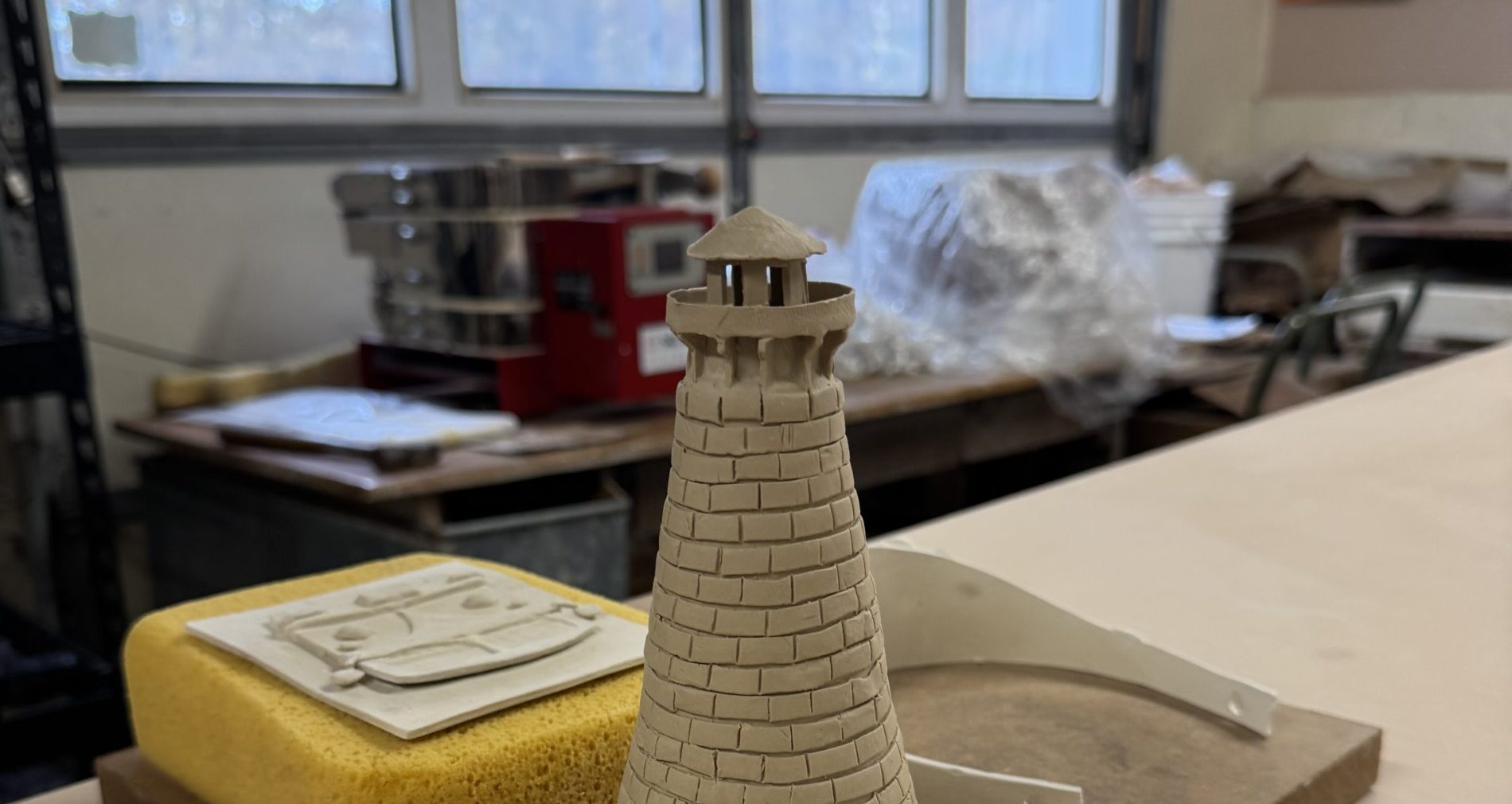
Image: A ceramic replica of Bodie Lighthouse that I made for my son this past christmas (before being bisqued and glaze-fired).

Leave a Reply